

 Facebook
 X
X
 Pinterest
 Copy Link
What Caused the Historic Paper Mill Odor in Canton, NC? What Has Changed Today?
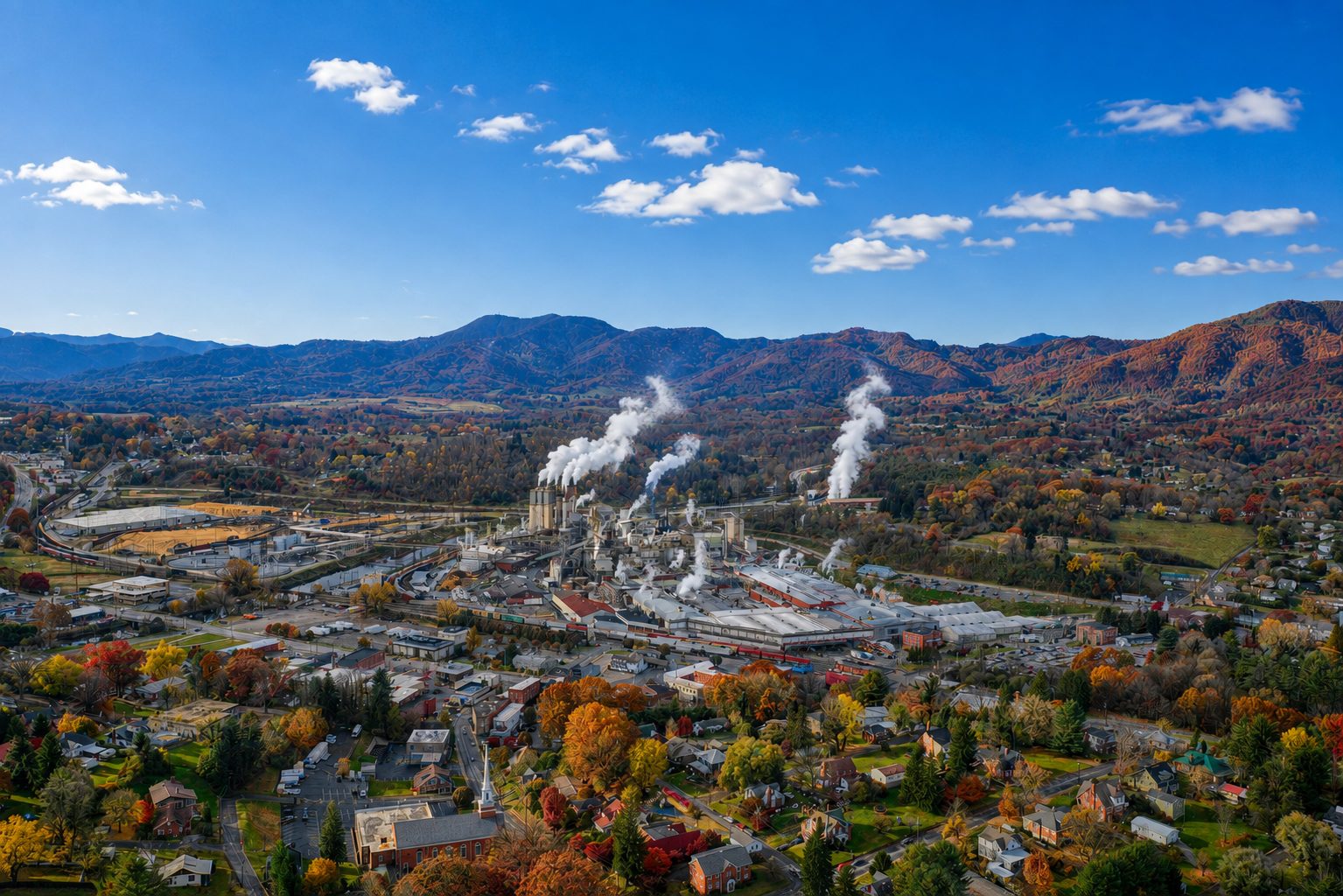
For more than a century, the paper mill in Canton, North Carolina, was one of the most recognizable parts of the community.
It provided generations of jobs, supported local families and businesses, and played an enormous role in shaping Canton and Haywood County.
It also produced something that longtime residents and visitors occasionally noticed: a distinctive industrial odor.
For someone considering a move to Canton today, that history can lead to some understandable questions.
What actually caused the odor? Was it connected to making paper? Is the mill still operating? And are there any lingering effects today?
The answers help explain an important part of Canton’s history — and why the Canton of today is different from the community some visitors may remember from years ago.
What Actually Caused the Historic Paper Mill Odor?
The Canton facility operated as a kraft pulp-and-paper mill.
Kraft pulping is one of the most common industrial methods for turning wood into pulp. In simplified terms, wood chips are cooked with chemicals to separate the cellulose fibers used to make paper from lignin, the natural material that helps bind wood together.
During that process, sulfur-containing compounds can be produced.
According to the U.S. Environmental Protection Agency, the characteristic odor associated with kraft mills comes primarily from reduced-sulfur compounds, including hydrogen sulfide, methyl mercaptan, dimethyl sulfide and dimethyl disulfide.
These compounds have extremely low odor thresholds, meaning the human nose can detect them even at relatively low concentrations.
That’s an important distinction: the historic odor was the result of an industrial manufacturing process. It was not a natural characteristic of Canton, the Pigeon River or the surrounding mountains.
Why Was the Odor More Noticeable on Some Days Than Others?
People who remember Canton during the mill’s operating years may also remember that the odor wasn’t necessarily noticeable every day.
Several factors could affect how noticeable industrial emissions were, including weather, wind direction, temperature and atmospheric conditions.
Different portions of the kraft process could also produce reduced-sulfur emissions, including digesters, evaporators, recovery equipment and lime kilns.
That helps explain why someone might drive through Canton one day and notice very little, while experiencing something different on another visit.
Was the Odor Connected to the Mill Actually Operating?
Yes.
The characteristic kraft-mill odor was associated with industrial processes taking place while pulp and paper were being manufactured.
That distinction is particularly important today.
Pactiv Evergreen announced the closure of the Canton mill in March 2023, and mill operations ceased in June 2023, ending more than a century of paper production at the site.
The North Carolina Division of Air Quality later rescinded the former mill’s Title V air-quality permit on September 23, 2024.
Simply put:
The kraft pulp-and-paper manufacturing process responsible for the historic industrial odor is no longer operating in Canton.
What About the Wastewater-Treatment Facility?
This is an important distinction because wastewater treatment and paper manufacturing are not the same process.
For many years, the mill’s wastewater-treatment facility handled both industrial wastewater from mill operations and municipal wastewater from the Town of Canton.
Wastewater treatment therefore continued after paper production stopped.
In May 2024, the Town of Canton publicly acknowledged odor complaints associated with the wastewater-treatment facility and said it was working with state and federal partners regarding the issue.
That should not be confused with the historic kraft-pulping odor created by paper manufacturing.
The old paper-manufacturing process had stopped.
Wastewater treatment was a separate continuing operation.
What Is Canton Doing About Wastewater Treatment Today?

Developing its own long-term wastewater solution has become one of Canton’s most important infrastructure projects since the mill closure.
The former system was built around an enormous industrial operation. Canton is now moving toward infrastructure better suited to the community’s future needs.
In April 2026, North Carolina awarded Canton an additional $3.5 million for its new wastewater-treatment plant and related regionalization/interconnection project.
By May 2026, state officials reported that Canton had received a total of $24.5 million in DEQ funding for Hurricane Helene-related water infrastructure improvements.
These investments aren’t simply about replacing old equipment.
They’re part of Canton developing modern infrastructure for a community that no longer revolves around a large paper-manufacturing facility.
Are There Lingering Environmental Effects at the Former Mill Property?
This is another question that deserves a factual, measured answer.
The former mill property was used for heavy industry for more than 100 years.
As is common with large former industrial sites, environmental monitoring, permitting and remediation work continues on portions of the property.
The North Carolina Department of Environmental Quality continues to track matters involving the former mill site, including groundwater assessment related to historical black-liquor contamination, above-ground storage-tank cleanup, an active industrial landfill, previously closed landfills and stormwater requirements.
Responsible parties remain obligated to complete required environmental cleanup activities even though paper production has ended.
But this distinction is important:
Environmental remediation on a former industrial site does not mean that residential properties throughout Canton are contaminated or affected.
Those are two very different conclusions.
Anyone purchasing real estate should evaluate environmental concerns based on the specific property being considered, just as a buyer should investigate flood exposure, drainage, wells, septic systems, road access and other property-specific considerations.
What About Air Quality?
Environmental regulation of the mill evolved considerably during its long operating history.
For example, North Carolina DEQ reported that sulfur-dioxide emissions from the facility declined approximately 93% between 2017 and 2019 following regulatory action and improvements at the plant.
State regulators also investigated dust complaints during the mill’s final years. DEQ reports that monitoring from October 2022 through March 2023 did not show an exceedance of the federal PM2.5 air-quality standard during that monitoring period.
For today’s discussion, however, the biggest change is straightforward:
The pulp-and-paper manufacturing operation that produced the historic kraft emissions is no longer operating.
The Mill’s Legacy Is About Much More Than an Odor
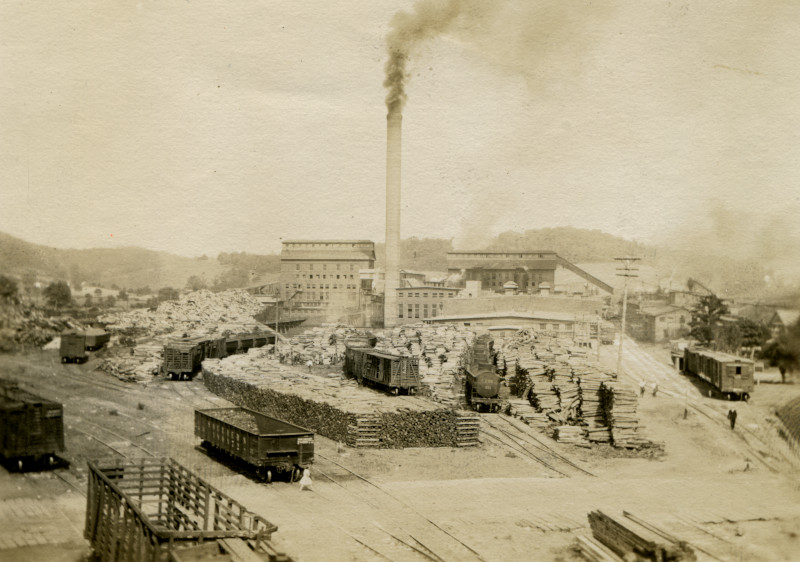
Any discussion of Canton’s mill deserves perspective.
For generations of Western North Carolina families, the mill meant:
Jobs. Careers. Opportunity. Stability. Family tradition.
Parents worked there.
Their children worked there.
In some families, several generations built careers at the mill.
Local businesses depended on mill employees, and the facility helped make Canton one of Western North Carolina’s most recognizable working mountain towns.
The mill whistle, shift changes, smokestacks and activity along the Pigeon River became woven into everyday life.
When production ended in 2023, Canton didn’t simply lose a manufacturing facility.
The community lost an institution that had helped shape its identity for generations.
That’s an important part of the story and one of the reasons Canton’s history deserves to be discussed respectfully.
Canton Today

If your impression of Canton comes from a visit 10, 20 or even 30 years ago, it’s worth experiencing the community again.
The industrial operation that once dominated the center of Canton no longer produces paper.
At the same time, Canton is moving through a major period of change involving the former mill property, wastewater infrastructure, Hurricane Helene recovery, flood resilience, economic development and continued investment in the community.
Some of those changes will happen relatively quickly.
Others may take many years.
That is what makes this moment in Canton’s history particularly interesting.
A town shaped by more than a century of industrial history is beginning to write an entirely new chapter.
What Does This Mean for Someone Considering Moving to Canton?
For prospective homebuyers, the best approach is to evaluate today’s Canton, rather than relying only on something remembered or heard about the community years ago.
Come visit.
Drive through downtown.
Explore the neighborhoods.
Follow the roads into the surrounding mountains.
Visit the local businesses.
Spend some time in the community.
Then decide whether Canton fits the Western North Carolina lifestyle you’re looking for.
Like most communities in Haywood County, different parts of Canton can provide very different experiences.
What Should Homebuyers Investigate in Canton?
When buying real estate in Canton, it’s helpful to evaluate each property individually.
Important considerations include flood exposure, particularly near the Pigeon River and other waterways; utilities, including whether the property has municipal water and sewer or private systems; road and driveway access, especially as you move into the surrounding mountains; internet availability for remote workers; property restrictions and governmental regulations; and proximity to areas likely to experience future redevelopment.
Canton includes properties in the valley, established neighborhoods, downtown locations and mountain settings.
A Canton mailing address alone doesn’t tell you everything you need to know about a property.
A Good Reason to Look at Canton With Fresh Eyes
Canton has experienced more change in the last several years than many communities experience in decades.
The paper mill that shaped the town for generations has closed.
The manufacturing process responsible for the historic kraft-mill odor has ended.
New wastewater infrastructure is being planned and funded.
The former industrial property continues its transition.
And the community continues to rebuild and recover following Hurricane Helene.
For someone thinking about moving to Western North Carolina, today’s Canton deserves to be evaluated based on what it is now — not simply what someone remembers it being years ago.
Thinking About Buying a Home in Canton or Haywood County?
At Better Homes and Gardens Real Estate Heritage, we help buyers explore Canton, Clyde, Waynesville, Maggie Valley and the surrounding communities of Haywood County and Western North Carolina.
Buying a mountain property involves more than finding the right number of bedrooms.
We help our clients understand roads and access, utilities, flood considerations, neighborhoods, elevation, mountain conditions and the many other details that can make one property a much better fit than another.
If you’re considering a move to Canton or anywhere in Haywood County, we’d be happy to help you explore your options. For tailored guidance and a clear strategy, connect with us at Better Homes and Gardens Real Estate Heritage. Reach out directly at info@bhgheritage.com to start a conversation about your next move. Nobody Knows Homes Better.
FAQ
What caused the historic paper mill odor in Canton, NC?
The Canton mill used the kraft pulping process. The EPA explains that kraft pulping can release reduced-sulfur compounds including hydrogen sulfide, methyl mercaptan, dimethyl sulfide and dimethyl disulfide. These compounds have very low odor thresholds and create the characteristic odor historically associated with kraft pulp mills.
Was the Canton paper mill odor connected to paper production?
Yes. The characteristic odor was associated with industrial processes involved in kraft pulp-and-paper manufacturing.
Is the Canton paper mill still operating?
No. Paper-mill operations ended in June 2023. The former facility’s Title V air-quality permit was rescinded in September 2024.
Is wastewater treatment the same thing as paper manufacturing?
No. They are separate processes. The mill’s treatment facility historically treated both industrial wastewater and Canton’s municipal wastewater, which is why wastewater treatment continued after paper manufacturing stopped.
Are there environmental cleanup activities at the former mill property?
Yes. North Carolina DEQ continues to oversee environmental matters involving portions of the former industrial site, including groundwater assessment, cleanup actions, landfill requirements and stormwater permitting.
Does that mean homes throughout Canton are affected?
No such conclusion should be made simply because environmental remediation is occurring at a former industrial site. Buyers should investigate environmental or other concerns based on the specific property they are considering.
Is Canton developing a new wastewater-treatment system?
Yes. Canton is pursuing a new wastewater-treatment project and has received significant state infrastructure funding toward its water and wastewater needs.
Additional Resources
EPA — Chemical Wood Pulping and Kraft Mill Emissions


