

 Facebook
 X
X
 Pinterest
 Copy Link
Do You Really Need 4WD to Live in Haywood County?
The short answer is no—not everyone living in Haywood County needs four-wheel drive or all-wheel drive.
If you live in town, along a state-maintained highway, or in a neighborhood with relatively level paved roads, a front-wheel-drive vehicle with good tires may serve you perfectly well.
But if the house you are considering sits at the top of a steep mountain road, has a gravel driveway, is accessed by a private road, or is at a higher elevation, AWD or 4WD can move from “nice to have” to something you may really appreciate.
That is why this question should actually be asked property by property—not county by county.
The Address Matters More Than the Town
Two homes with a Maggie Valley mailing address can offer completely different driving experiences.
One might be located close to Soco Road with a nearly level paved driveway. Another could be several miles away, hundreds of feet higher in elevation, at the end of a steep private gravel road.
The same is true in Waynesville, Clyde and Canton.
When buying a mountain home, we encourage buyers to look beyond:
- The home’s square footage
- The mountain view
- The acreage
- The kitchen
- The number of bedrooms
And spend some time studying the last mile of the drive to the house.
Sometimes that last mile tells you as much about mountain living as the house itself.
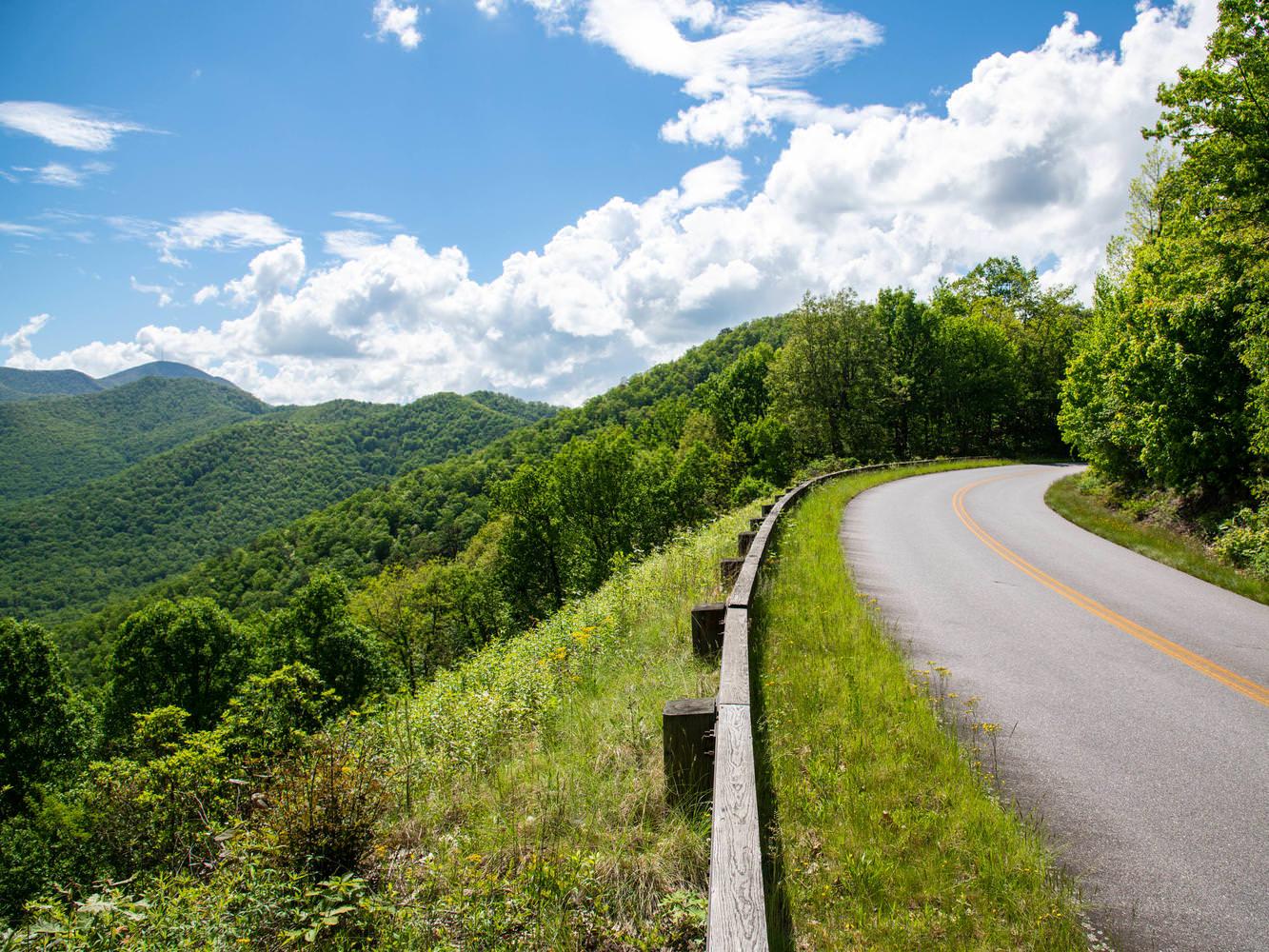
When You Probably DON’T Need 4WD
For many Haywood County residents, a conventional vehicle works just fine.
You may be perfectly comfortable without AWD or 4WD if the home has:
- A paved road leading to it
- A relatively gentle road grade
- A paved or level driveway
- State- or town-maintained road access
- Good sun exposure on the roadway
- Easy access to a primary highway
- Little need to travel during significant winter-weather events
Waynesville’s Public Works Department, for example, includes snow removal among its street-maintenance responsibilities. Canton also uses its street department and snow plows to clear town-maintained streets during winter weather.
NCDOT maintains a large portion of North Carolina’s public roadway system, and travelers can check current road conditions through the state’s DriveNC system during winter-weather events.
So simply moving to the mountains does not automatically mean you need to trade your car for a four-wheel-drive truck.
When AWD or 4WD Starts Making a Lot More Sense
Now imagine the home is reached by a narrow gravel road with several switchbacks and a steep final climb.
That’s a different conversation.
AWD or 4WD becomes more valuable when a property has a combination of:
A Steep Driveway
Mountain driveways can sometimes be considerably steeper than buyers accustomed to flatter areas expect.
A driveway may feel perfectly manageable on a sunny October afternoon but quite different after freezing rain or a light coating of snow.
A Gravel Road
A properly maintained gravel road can be excellent, but traction can vary as gravel washes, ruts develop or loose material collects on steeper sections.
A Private Road
This is an especially important distinction.
Haywood County’s subdivision regulations specifically address private-road maintenance and provide that property owners can be responsible for maintaining and repairing those roads and paying the associated costs.
In other words, don’t assume a snow plow is automatically coming.
Before purchasing, determine:
- Who maintains the road?
- Is there a road-maintenance agreement?
- Who pays for gravel and grading?
- Who handles snow removal?
- Is there a homeowners association?
- Are maintenance expenses divided equally?
- Can emergency and delivery vehicles comfortably reach the house?
These questions can be every bit as important as whether the vehicle in your driveway says AWD on the back.
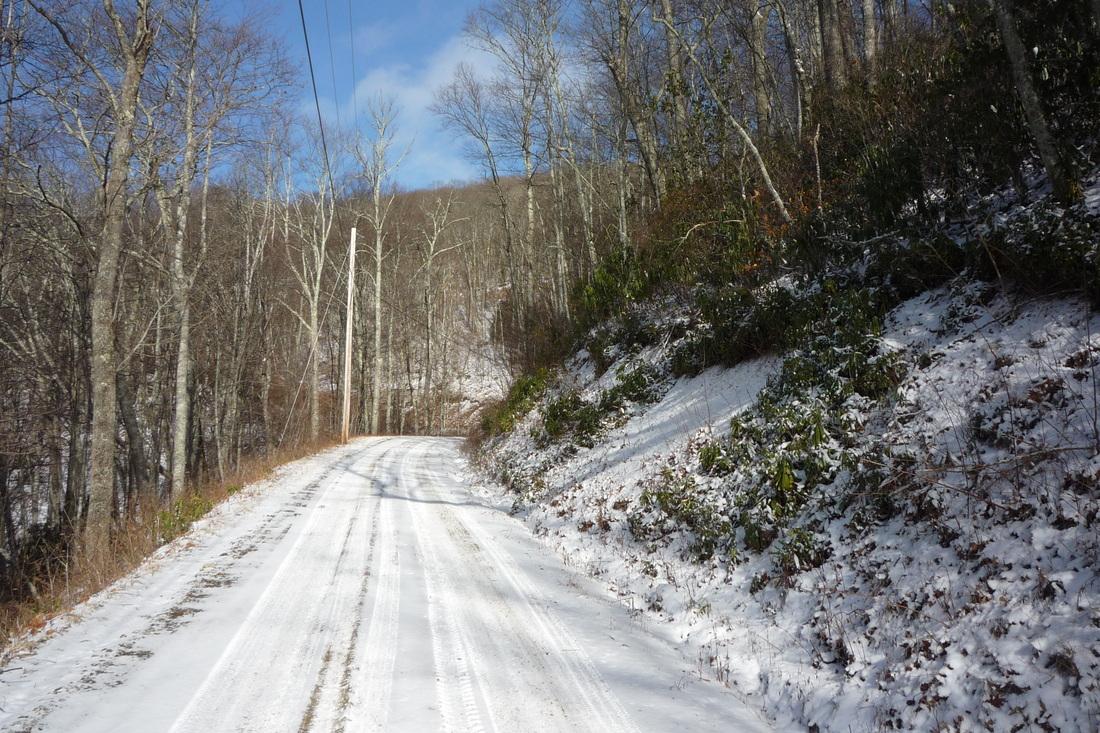
AWD, 4WD and Good Tires Are Not the Same Thing
Another misconception is that AWD makes a vehicle immune to winter road conditions.
It doesn’t.
AWD can improve a vehicle’s ability to accelerate and gain traction, but it does much less to help with braking and cornering on snow or ice. Tire condition remains extremely important.
The National Highway Traffic Safety Administration recommends preparing vehicles for winter conditions and emphasizes proper tire condition and understanding how your vehicle behaves in winter weather.
And then there is black ice.
NCDOT warns that black ice can appear simply as a wet spot and may form when melting snow or ice refreezes. During serious winter conditions, its safest recommendation is sometimes simply to avoid unnecessary driving.
So think of AWD or 4WD as another tool—not permission to ignore road conditions.
Mountain-Living Tip: Drive the Road Before You Buy the House
This is one of the simplest pieces of advice we can give someone shopping for a mountain property.
Pay attention on the drive in.
Ask yourself:
- How steep is this?
- Would I be comfortable driving it at night?
- Is there room for two vehicles to pass?
- Is the road paved or gravel?
- Are there drop-offs?
- Are there sharp switchbacks?
- Does the road get much sunlight?
- Could I get up this driveway after a light snow?
- Where would I turn around?
- Would friends and family be comfortable driving here?
- What happens if I eventually need a moving truck, propane delivery, contractor or emergency vehicle?
For a primary residence, you’ll make that drive hundreds of times each year.
For a vacation home, you may have guests or renters who aren’t accustomed to mountain roads at all.
Access is part of the property.
What About Maggie Valley?
Maggie Valley illustrates perfectly why there isn’t one universal answer.
There are homes with easy access near the valley floor and others located considerably farther up surrounding mountainsides.
The view may get better as you climb—but road considerations can change too.
Buyers considering a Maggie Valley mountain home should pay particular attention to:
- Road grade
- Driveway grade
- Pavement versus gravel
- Road-maintenance responsibility
- Snow removal
- Sun exposure
- Turnaround areas
- Seasonal accessibility
A spectacular long-range mountain view can absolutely be worth the climb.
You just want to know what that climb involves before you buy.
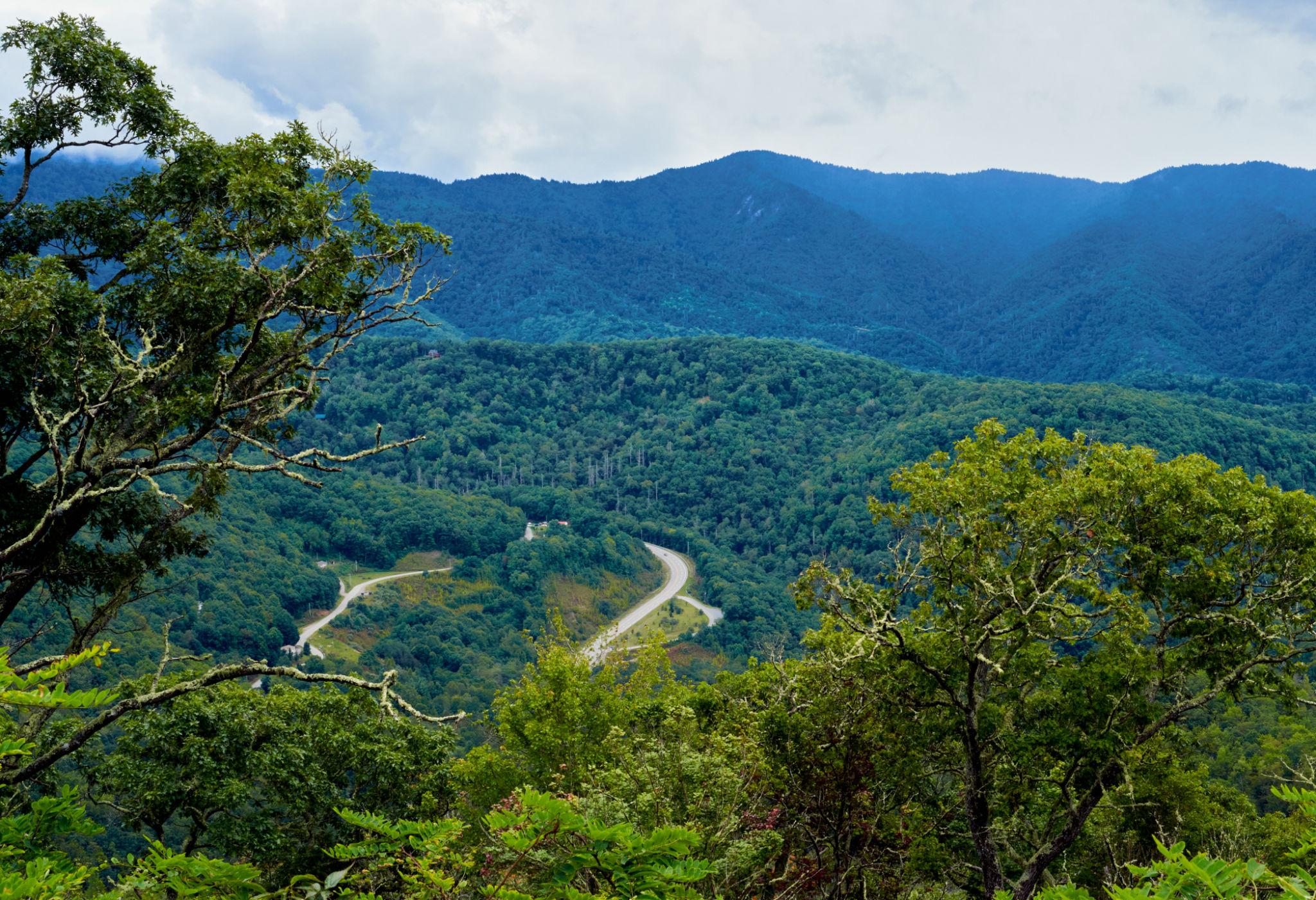
What About Waynesville, Canton and Clyde?
Again, it depends far more on the specific property than the town name.
A home in downtown Waynesville may require no special vehicle consideration whatsoever, while a Waynesville-address property several miles outside town could have substantial mountain access.
Likewise, Canton and Clyde have homes ranging from relatively level valley locations to rural mountain properties reached by secondary or private roads.
North Carolina even provides a Public Street Information Database that consumers can use to research road ownership and maintenance status.
This is another reason we recommend evaluating the property, road and location together.
Our Advice for Someone Moving From Florida or Another Flatter Area
If you’re relocating from Florida, coastal North Carolina or another relatively flat part of the country, don’t let mountain roads scare you.
Thousands of people live here every day without driving giant trucks.
Instead, give yourself time to understand what you’re buying.
If easy access is important, tell your real estate agent upfront:
“I want a mountain home, but I don’t want a difficult mountain road.”
That single sentence can save a tremendous amount of time.
Conversely, if your priority is privacy, elevation and an incredible view—and you’re completely comfortable with a steep road—tell your agent that too.
Neither choice is right or wrong.
They’re simply different versions of mountain living.
A Mountain Home Access Checklist
Before buying a property in Haywood County, consider checking:
-
Is the road state-maintained, town-maintained or private?
-
Is there a recorded road-maintenance agreement?
-
Who pays for repairs and gravel?
-
Who plows snow?
-
Is the driveway paved, concrete or gravel?
-
How steep is the driveway?
-
Are there switchbacks?
-
Is there adequate drainage?
-
Does the roadway receive winter sunlight?
-
Is there enough room to turn around?
-
Could a delivery truck reach the home?
-
Could emergency vehicles reach the home?
-
Would you be comfortable driving the road after dark?
-
Would AWD or 4WD make you more comfortable living there?
That is a much better checklist than simply asking, “Do people in North Carolina need 4WD?”
Frequently Asked Questions
Do I need four-wheel drive to live in Maggie Valley, NC?
Not necessarily. Many Maggie Valley properties have straightforward paved access. However, homes higher on the mountains or reached by steep or private roads may make AWD or 4WD much more useful.
Does it snow enough in Haywood County to require 4WD?
There is no countywide requirement for 4WD. Winter road conditions can vary by storm, road and location. NCDOT recommends checking current conditions and avoiding unnecessary travel when snow or ice makes driving hazardous.
Is AWD better than front-wheel drive in the mountains?
AWD can provide additional traction when accelerating on slippery or steep surfaces, but tires and driver judgment remain critical, particularly when braking or turning on snow and ice.
Are private mountain roads plowed by the state?
Do not assume they are. Private-road maintenance can be the responsibility of the property owners, so buyers should review maintenance agreements and determine who is responsible for snow removal before purchasing.
How can I tell whether a road is state maintained?
NCDOT provides a Public Street Information Database showing road ownership and maintenance information throughout North Carolina.
The Bottom Line
You don’t need 4WD simply because you live in Haywood County.
But the particular home you choose may make AWD or 4WD a very worthwhile investment.
That’s one of the differences between buying real estate in the mountains and buying in flatter markets.
Here, you’re not simply buying the house.
You’re buying the driveway, the road, the elevation, the exposure, the access—and the view waiting for you when you reach the top.
At Better Homes and Gardens Real Estate Heritage, our agents know Haywood County and the mountain roads that connect Maggie Valley, Waynesville, Canton, Clyde and the surrounding communities.
If you’re considering a move to Western North Carolina, we’ll help you look at more than the listing photos. We’ll help you understand what everyday life at the property may actually be like.
For tailored guidance and a clear strategy, connect with us at Better Homes and Gardens Real Estate Heritage. Reach out directly at info@bhgheritage.com to start a conversation about your next move. Nobody Knows Homes Better.
Additional Resources
For the published version, link appropriate anchor text to these authoritative resources:
- NCDOT Winter Driving Safety — winter-driving recommendations and black-ice information.
- DriveNC / NCDOT Traffic & Travel Information — current road conditions and closures.
- NCDOT Public Street Information Database — road ownership and maintenance research.
- NHTSA Winter Driving Tips — vehicle and winter-driving safety.
- Haywood County Subdivision Regulations — information related to private-road maintenance responsibility.


